
4 Ways to Create a Keepsake That Never Loses Its Value
The human brain does not store everything with the same intensity. Of all the moments we live through, only a small portion becomes lasting memory. The rest fades little by little, first in the details, then in the outline, until it almost disappears completely. Science shows that this process is not random: the brain prioritizes what carries emotion, attention, and meaning. In other words, it keeps what truly mattered.
This means that creating a memory that never loses its value is not a matter of luck. It is a choice. It is deciding to be present, to record with intention, and to transform a moment into something that will last far beyond it. This article offers four concrete ways to do that.
1. Live the moment with your full attention
Neuropsychologist Leninha Wagner explains that the brain organizes information better when focus is directed toward a specific event. In moments of distraction, haste, or overstimulation, memory formation is impaired, and the memory tends to be lost before it even becomes fixed.
This has a direct implication in everyday life: moments lived with a phone in hand, with divided attention, or with the rush of already thinking about the next commitment rarely become rich memories. The same moment, lived with full presence, has a much better chance of being recorded clearly and lasting for years.
The practice is simple in theory and challenging in execution: consciously choosing to be there. Put the phone away. Look at the person in front of you. Listen to what is being said. Feel what the environment offers. This quality of attention is the first ingredient of a memory that does not fade away.
2. Involve more than one sense in the experience
Research on memory shows that multisensory experiences create significantly more vivid memories than those that activate only sight or hearing. When the whole body participates in a moment, the brain records it much more deeply.
The smell of a specific food can bring back an entire afternoon from childhood. The texture of a fabric can evoke a person who is no longer present. A sound can reconstruct an environment with a precision that no photo can reach. These triggers work because emotional memory is sensory: it is stored together with the physical information of the moment in which it was formed.
To create memories that last, it is worth thinking about how to make an experience more complete for the senses. A special dinner takes on another dimension with music chosen for the moment, with the table carefully set, with the smell of something the person loves. These details may seem small, but they are exactly the kind of thing the brain keeps for decades.
3. Record with intention, not just with your phone
Recording a moment and living it are not the same thing. Taking excessive photos can, paradoxically, weaken memory, because it divides attention and turns the experience into content rather than lived experience. Recording with intention is different: it is done with awareness of what is being preserved and why.
A carefully chosen photo, taken at the right moment, is worth more than a hundred automatic images. A letter written right after a special moment, while the details are still fresh, captures things no camera can. A journal with a few lines about what was felt that day turns an ordinary date into a record that will be reread with emotion years later.
The format does not matter as much as the intention. What makes a record last is the care put into it, the clarity that it deserved to be preserved, and the willingness to go beyond the automatic to capture something real.
4. Turn the memory into something that can be revisited
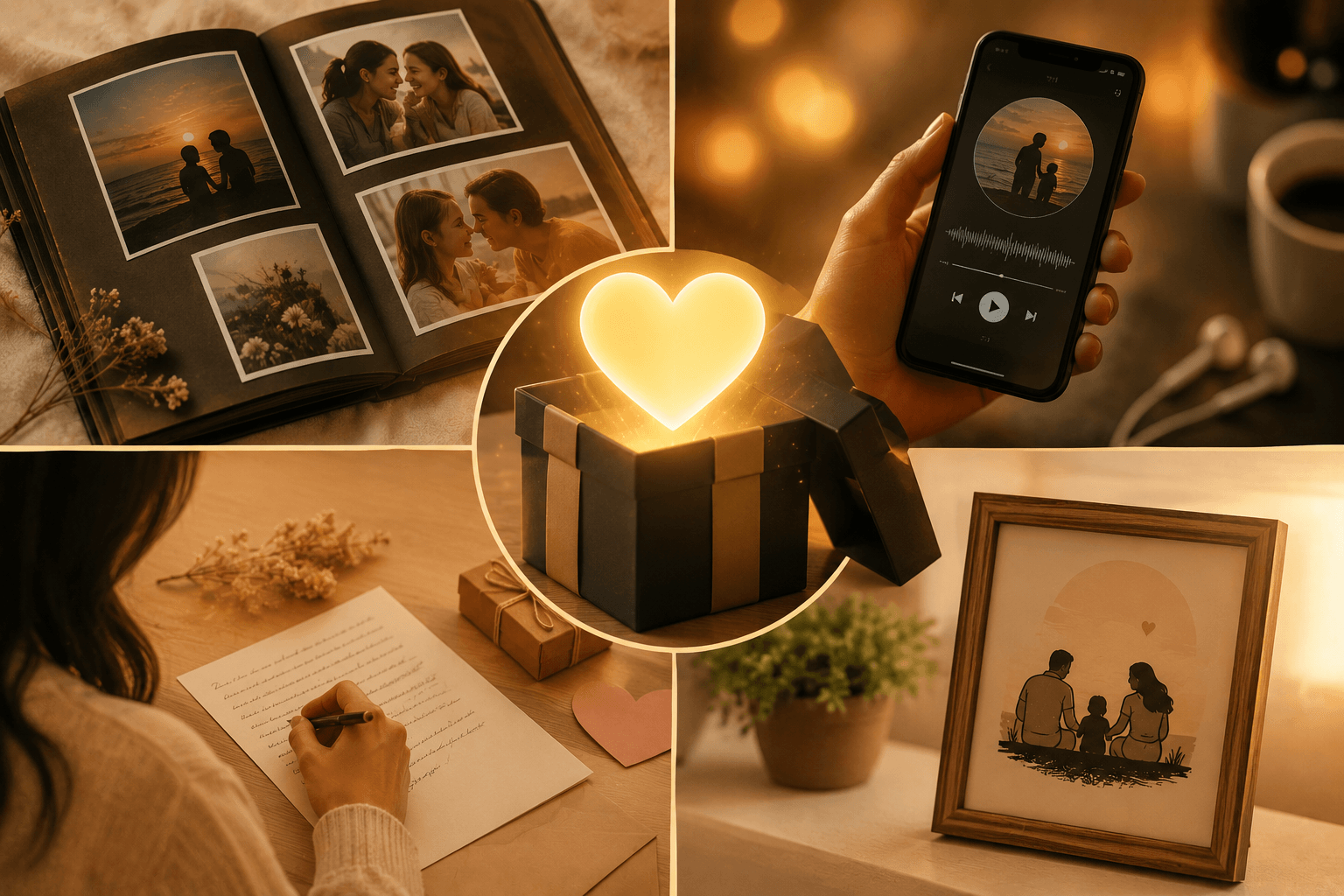
A memory that exists only in the mind is vulnerable to time. It changes, loses details, and sometimes blends with others. But when it takes on a concrete form, something that can be seen, heard, or touched, it begins to have an existence independent of what time does to biological memory.
An album with photos and handwritten notes. A carefully edited video, with the right images in the right order. An object that carries the symbol of that moment. Or a song created specifically to tell that story.
Makesong.me is a platform that uses artificial intelligence to compose original songs based on real stories. You describe the moment, the people involved, what was felt, and the platform creates a brand-new song made for that specific memory. It is a way of turning a memory into something that can be heard, shared, and revisited whenever longing calls. And each time the song plays, the memory comes back whole.
What all these ways have in common
Attention, sensory richness, careful recording, and materialization. Each of these four ways responds to the same principle that science confirms: the brain keeps what it receives with emotional intensity and what was treated as important.
Memories that never lose their value do not happen by accident. They are built by people who decided, in that moment, that what was happening deserved more than divided attention. That person, that encounter, that achievement, were too important to let pass without leaving a mark.
Memories are not created in the past. They are created now, in the way you choose to be present in the moment while everything is still happening.
You might also like
6 creative ways to preserve an important memory
5/9/2026

Mother's Day song ideas
5/10/2026
Why Does Music Have the Power to Move Us?
5/11/2026

8 different ways to honor someone who made a difference in your life
5/13/2026

7 exciting ways to show your child how special they are
5/19/2026
5 Creative Gift Ideas to Surprise Your Spouse
5/27/2026