
10 Creative Ideas to Make Your Store Stand Out from the Competition
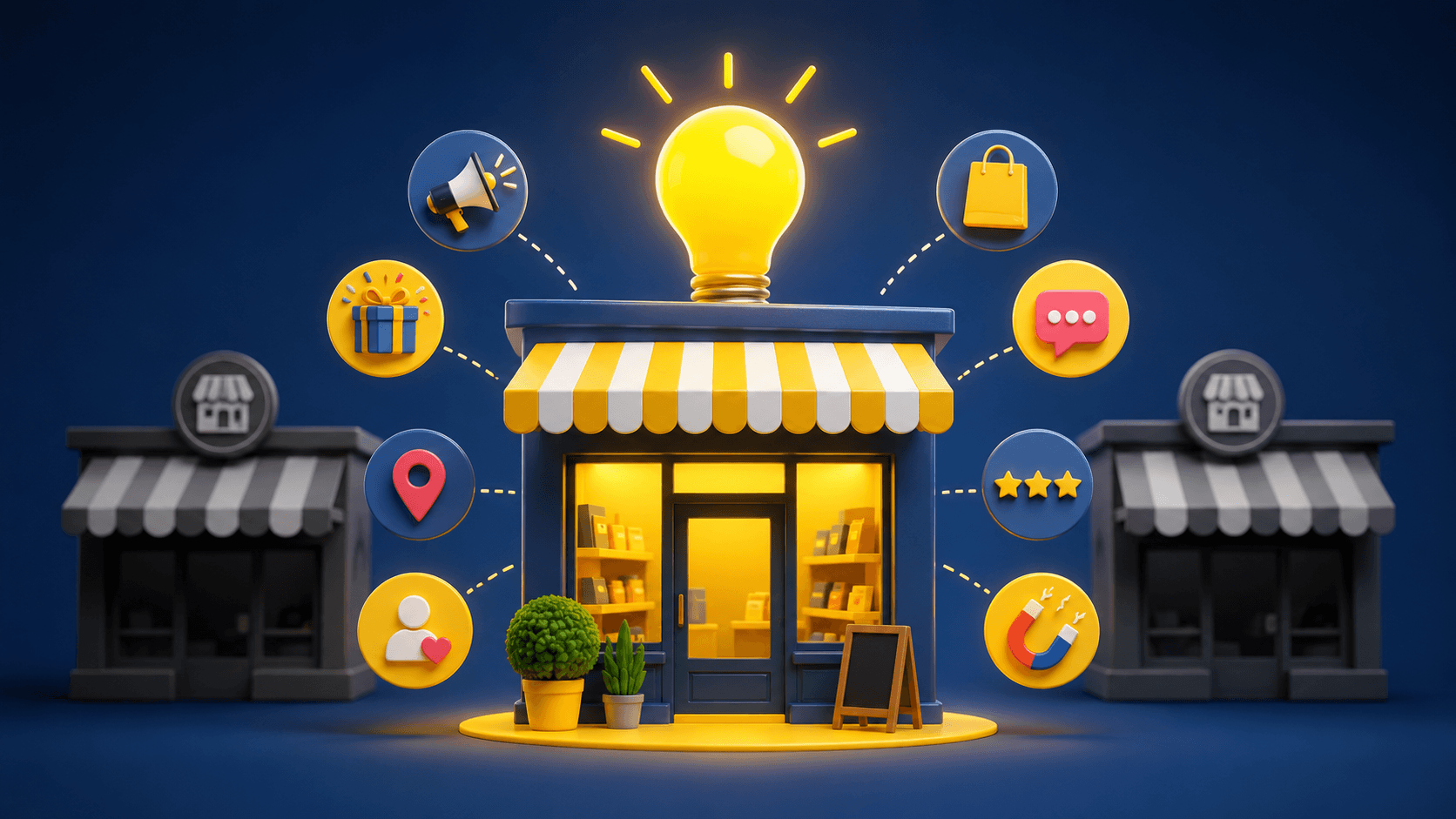
In a market where products look alike, prices level out, and ads repeat themselves, what makes a customer choose your store instead of the one next door? The answer is almost never in the product itself. It is in the experience, in the memory the brand leaves behind, in the detail that no one else took the care to think about.
Standing out from the competition does not require a million-dollar budget. It requires creativity, consistency, and a willingness to do things differently. The ideas below are practical, adaptable to different segments, and designed to generate real results, whether in attracting new customers, building loyalty among existing buyers, or strengthening the brand’s identity.
1. Create a sonic identity for your business
Most stores think about visual identity, but few think about sonic identity. Background sound, hold music on the phone, audio in social media videos, and especially the brand’s jingle are elements that stay in the consumer’s mind long after they leave the store.
A well-made jingle is one of the most effective marketing tools that exists. It compresses the essence of the brand into a few seconds, is easy to remember, and can be used on radio, social media, videos, and at points of sale. Makesong for Business allows you to create original jingles for businesses using artificial intelligence: you describe the brand’s tone, the audience, the differentiators, and what you want to communicate, and the platform composes a professional song customized for your company. It is an affordable way to have a sonic asset that the competition probably does not have.
2. Invest in the in-store experience
The customer who walks into a physical store is looking for something e-commerce does not offer: a sensory experience. The arrangement of products, the lighting, the scent of the environment, and the temperature of the space directly influence the purchase decision and how long the customer stays on-site.
Small changes make a difference: a storefront display that tells a story instead of just showing products, a comfortable waiting area, a distinctive scent that the customer starts to associate with your brand. Sensory marketing is accessible and, when well executed, turns an ordinary visit into a positive memory.
3. Use social media to educate, not just to sell
Most stores use Instagram, TikTok, and WhatsApp to promote products and offers. It works, but it is what everyone does. What sets a brand apart on social media is the ability to generate value before asking for the sale.
A shoe store can teach how to choose the right sneakers for each type of activity. A tool store can show how to solve simple household problems. A bookstore can create annotated lists by theme. When the store positions itself as an expert, it builds authority and creates a reason for the customer to follow the profile even when they are not ready to buy.
4. Create a loyalty program that makes sense
Point and stamp programs have existed for decades, but they still work because they respond to a basic human behavior: people like to be rewarded. The problem is that many programs are confusing, hard to redeem, or not very appealing.
The key is to simplify and make the reward truly desirable. A clear system, with real benefits and frequent communication about accumulated points, creates the habit of returning and increases the average ticket over time.
5. Build partnerships with complementary businesses
Two businesses that serve the same audience but do not compete with each other can benefit greatly from joint actions. A gym and a supplement store, a pet shop and a veterinary clinic, a flower shop and a gift stationery store. Together, they reach a larger audience at lower cost.
Partnerships can take shape through cross-discounts, co-organized events, combined packages, or simple mutual referrals. The result is expanded visibility for both sides without the need for major investments in paid media.
6. Personalize the post-sale experience
Most stores end the relationship with the customer at the moment of payment. That is a mistake. The post-sale stage is one of the cheapest and most effective ways to generate loyalty and referrals.
A personalized message after the purchase, a handwritten note inside the package, a follow-up call a few days later, or a discount coupon sent on the customer’s birthday are simple gestures that create a perception of genuine care. Customers who feel remembered come back and refer others.
7. Invest in packaging that becomes content
Packaging is the customer’s first physical contact with your brand after the purchase. When it is beautiful, creative, or surprising, it becomes spontaneous content on social media. The so-called "unboxing" is one of the types of content most shared by consumers.
Investing in packaging with a strong visual identity, including a small gift or unexpected note inside the box, and encouraging the customer to share the experience are low-cost actions with high potential for organic reach. Every unboxing post is a free ad made by a real customer.
8. Promote in-person events and experiences
Stores that become meeting points and experience hubs create a bond with the audience that goes far beyond the commercial transaction. A workshop, a product demonstration, a themed afternoon, or a partnership with an industry professional turns the space into a destination.
In-person events generate content for social media, attract new audiences, strengthen relationships with existing customers, and position the store as a reference in the segment. They do not need to be large or expensive. They need to be relevant to the right audience.
9. Build a strong local digital presence
Before visiting a store for the first time, most people search on Google. A well-maintained Google Business Profile, with updated photos, correct hours, responses to reviews, and frequent posts, reduces friction between interest and visit.
Positive reviews answered thoughtfully convey credibility. A well-cared-for profile appears more prominently in local searches and convinces the customer before they even arrive at the store. It is one of the most accessible and most overlooked digital marketing actions for brick-and-mortar retail.
10. Launch promotions with real urgency
Promotions without a defined deadline lose their persuasive power. The consumer postpones the decision when they believe the offer will continue to be available. Flash promotions, with clearly communicated start and end times, activate a sense of urgency and increase the conversion rate.
WhatsApp broadcast lists, stories with countdowns, and notifications for registered customers are effective channels for promoting this type of action. The rule is: the clearer the deadline, the greater the perception of exclusivity and the greater the urgency to act.
Practical summary of the 10 ideas
To make it easier to view each strategy with its respective impact and cost, check out the table below:
| Idea | Main objective | Estimated cost | Execution difficulty |
|---|---|---|---|
| Sonic identity and jingle | Brand memorability | Low | Low |
| In-store sensory experience | Increase dwell time and conversion | Low to medium | Medium |
| Educational content on social media | Authority and engagement | Free to low | Medium |
| Loyalty program | Retention and increase in average ticket | Low | Low |
| Partnerships with complementary businesses | Reach a new audience | Free | Low |
| Personalized post-sale experience | Loyalty and referrals | Free to low | Low |
| Packaging that becomes content | Organic marketing and perceived value | Low to medium | Low |
| In-person events and experiences | Positioning and relationship-building | Variable | Medium |
| Local presence on Google | Visibility in local searches | Free | Low |
| Promotions with real urgency | Increase immediate conversion | Free to low | Low |
The differentiator starts before the customer walks in
Standing out from the competition is not a one-time event. It is the result of consistent decisions over time: the packaging designed with care, the jingle that stayed in their head, the birthday message that arrived at the right time, the event that created a reason to come back.
None of these actions require large budgets. All of them require the same thing: the decision to do more than the basics. And in a market where most stores do the basics, those who go beyond are remembered.
You might also like

The Invisible Present: Ideas That Take Up No Space, Yet Fill Everything
5/3/2026

7 ways to turn an ordinary day into something unforgettable
5/4/2026

5 ways to surprise him on Father’s Day with something he’d never expect
5/5/2026

6 creative ways to preserve an important memory
5/9/2026

Mother's Day song ideas
5/10/2026

Why Does Music Have the Power to Move Us?
5/11/2026